
Back pain ranks among the most widespread health complaints in the United States, affecting up to 80% of many adults at some point in their lives. Whether it starts as a dull ache after a long workday or arrives as sudden stabbing pain while lifting groceries, back pain can disrupt daily life, limit physical activity, and keep you from the things you enjoy most.
Understanding the difference between acute back pain and chronic back pain is the first step toward finding real relief. Acute back pain typically lasts a few days to a few weeks, often improving on its own with basic self care. Chronic back pain, defined as pain that lasts three months or longer, affects about 8% of Americans and frequently requires a more targeted treatment plan. Back pain can often improve within a few weeks without serious underlying conditions, but most back pain resolves on its own only when there are no persistent symptoms that need further assessment.
- Back pain is a leading cause of disability and missed work across the U.S.
- Acute back pain usually improves with conservative treatment, while chronic lower back pain may need specialist evaluation
- Back pain often improves with conservative care and physical therapy
- Alleviate Institute of Spine and Pain, with offices on Pico Blvd and Wilshire Blvd in Los Angeles, specializes in diagnosing and treating spine-related pain through minimally invasive, interventional approaches
Common Symptoms of Back Pain (and When It Becomes an Emergency)
Back pain symptoms vary widely depending on the cause and location. Most people describe their discomfort in one or more of the following ways:
- A persistent dull ache across the lower or mid-back that lingers throughout the day
- Sharp pain or stabbing pain that flares with specific movements like bending, twisting, or heavy lifting
- Muscle tightness, spasms, or stiffness in the back muscles, especially after sitting or standing for long periods
- Burning sensations along the lumbar spine or between the shoulder blades
- Leg pain radiating from the lower back into the buttocks, thighs, or calves, sometimes accompanied by numbness, tingling, or leg weakness in one or both lower extremities
Pain symptoms often feel worse with bending, lifting, prolonged sitting, or walking, and may improve when lying down. In conditions like spinal stenosis, leaning forward can temporarily ease discomfort.
When back pain becomes a medical emergency: Seek immediate medical attention if you experience sudden severe pain after trauma, loss of bladder or bowel control, saddle-area numbness, rapidly progressive leg weakness, fever with back pain, or unexplained weight loss. Emergency care should be sought for back pain with red flags like bladder issues or numbness. Any back pain paired with chest pain, shortness of breath, or signs of stroke requires a 911 call.
The Lumbar Spine: How the Lower Back Works
The lumbar spine is the lower portion of your back, made up of five vertebrae (L1 through L5) stacked on top of one another. Between each vertebra sits an intervertebral disc that acts as a shock absorber, cushioning the bones during everyday activities like walking, bending, and lifting.
- Facet joints connect adjacent vertebrae and guide motion while bearing load, especially during twisting and extension
- The spinal canal runs through the center of the vertebral column, protecting the spinal cord and the nerve roots that branch out to the legs and lower extremities
- Nerves exiting the lumbar spine travel into the legs, which is why lower back problems can cause leg pain, tingling, or weakness far from the actual injury site
- The lumbar spine carries most of the body’s weight, making low back pain one of the most common causes of disability worldwide. The vast majority of back pain is mechanical or structural in nature, meaning it originates from the bones, discs, joints, muscles, or nerves of the lumbar spine rather than from serious medical conditions like infection or cancer.
Acute vs. Chronic Back Pain
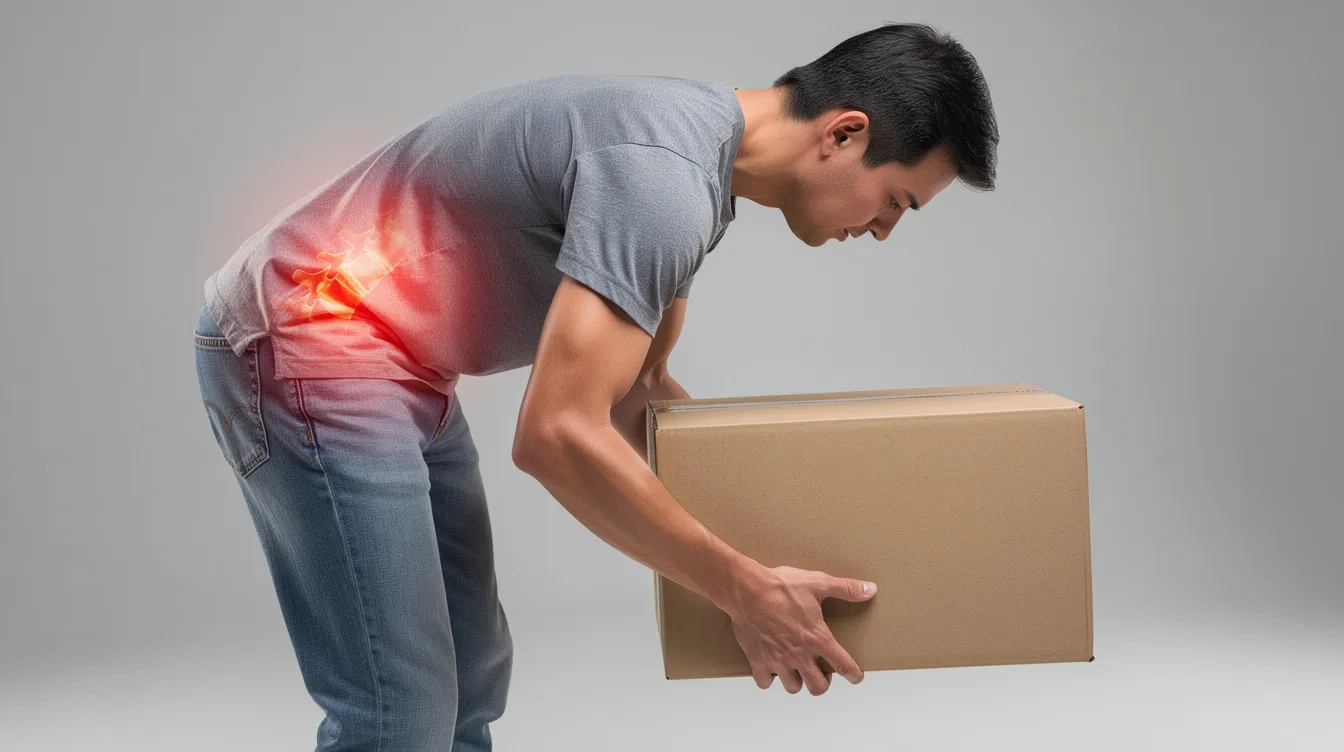
Acute back pain starts suddenly, often linked to a single event like lifting a heavy box or a pulled back muscle during exercise. It typically lasts less than six weeks. Back strains and sprains are the most common causes of acute episodes, and muscle strains or ligament sprains account for the majority of these injuries.
Subacute pain falls in the six- to twelve-week range. When pain lasts beyond twelve weeks, it qualifies as chronic back pain. Chronic lower back pain may fluctuate in intensity but never fully goes away. Chronic back pain symptoms differ from acute pain by lasting longer and often involving deeper structural changes rather than simple soft-tissue injury.
- Acute pain is usually related to muscles, ligaments, or minor injury and pain resolves with basic care in a few weeks
- Chronic pain more commonly involves discs, facet joints, nerves, or vertebral degeneration, and chronic back pain often results from muscle deconditioning
- Chronic pain can persist even after tissues have healed, driven by ongoing inflammation, nerve sensitization, or structural changes in the spine
- Avoiding activity because of chronic pain leads to further muscle weakness, often making pain worse over time
The Most Common Causes of Lower Back Pain
Lower back pain is rarely caused by a single factor. Multiple conditions can coexist, making accurate diagnosis essential. Here are the most common causes:
- Muscle strain and ligament sprain: The most frequent triggers for acute back pain, often linked to heavy lifting, sudden twisting, or repetitive movements during work or sports
- Degenerative disk disease: Age-related wear that causes discs to dehydrate and lose height, leading to chronic lower back pain and stiffness. Chronic back pain can be caused by degenerative disk disease
- Herniated disks: When the soft inner material of a disc pushes through its outer ring and compresses a nearby nerve root, it can cause intense back and leg pain. Bulging or ruptured discs can press on nerves and cause sharp pain. Herniated disks can cause lower back pain whether from a specific incident or gradual wear
- Facet joint pain: Breakdown of cartilage and inflammation in the facet joints causes localized pain, stiffness, and sometimes referred gluteal or leg pain. Osteoarthritis is a common cause of chronic lower back pain
- Lumbar spinal stenosis: Narrowing of the spinal canal that compresses nerves, causing pain, numbness, and weakness. Arthritis can narrow the space around the spinal cord and cause pain
- Spinal fractures: Compression fractures often result from osteoporosis, especially in older adults, and can cause sudden severe pain
- Scoliosis and other deformities: Conditions like scoliosis can lead to chronic back pain due to abnormal spinal curvature that overloads certain segments, while ankylosing spondylitis causes chronic conditions of inflammation and stiffness
Everyday activities such as prolonged desk sitting, repetitive bending, or heavy manual labor can accelerate these degenerative changes over time.
Chronic Back Pain: Underlying Conditions and Lifestyle Triggers
Chronic pain in the back rarely stems from one root cause. It usually reflects a combination of structural issues, genetics, aging, and lifestyle habits.
- Muscle deconditioning: Weak core and back muscles fail to support the spine adequately. Muscle deconditioning contributes to chronic back pain, often developing from inactivity, prolonged sitting, or fear of movement after an injury
- Poor posture and body mechanics: Poor posture can lead to chronic back pain. Hunching over a laptop or frequent bending in physical jobs places ongoing stress on the spine. Over time, kyphosis can develop from poor posture and lead to pain. Maintaining proper body mechanics prevents back pain
- Prolonged sitting: Sitting for long periods can tighten hip flexors and worsen pain, particularly for office workers and long-distance drivers
- Overuse: Repetitive everyday activities like housework, childcare, and driving produce micro-injuries that accumulate over years
- Lifestyle factors: Obesity, smoking, poor sleep, and high stress amplify inflammation and make chronic pain more persistent and harder to treat. Weight management can reduce physical pressure on the spine
- Emotional impact: Chronic back pain often disrupts mood, sleep, relationships, and job performance, making early and comprehensive management with a spine specialist important
When to See a Spine and Pain Specialist in Los Angeles
Not all back pain requires a specialist visit, but certain warning signs indicate that home treatment is no longer enough:
- Pain lasting more than four to six weeks despite conservative treatment
- Repeated flare-ups that interfere with work, caregiving, or daily life
- Pain that wakes you at night or progressively worsens
- Numbness, tingling, or weakness in one or both legs, difficulty walking, or “foot drop”
- Any red flag signs: fever, recent cancer history, unexplained weight loss, trauma, or loss of bladder or bowel control (these require urgent evaluation)
Imaging tests are not automatically necessary for ordinary back pain cases, but a spine specialist at Alleviate Institute of Spine and Pain will take a thorough history, perform a targeted physical exam, and order X-ray, MRI, or CT when appropriate to identify the underlying condition driving your symptoms. If conservative care from your primary doctor has not provided enough relief, we encourage readers in Los Angeles and West Los Angeles to call or schedule an appointment for individualized diagnosis and treatment options.
Conservative Care for Back Pain: What to Try First
Conservative treatments are the most effective first-line methods for managing back pain, and many treatment approaches start with non-invasive methods before considering anything more advanced.

- Activity modification: Home care including light activity and using heat or ice can manage acute back pain. Gentle movement and short walks help keep back muscles from stiffening. Staying active can prevent stiffness and boost blood flow to the back
- Heat and cold therapy: Cold compresses numb sharp pain and lower swelling after an injury. Heat therapy improves blood flow and relaxes tight muscles in back pain treatment. Heating pads relax tight muscles and improve blood flow after about two days. Hot and cold therapy can reduce swelling and ease tight muscles, providing temporary pain relief for acute back pain
- Over-the-counter medications: OTC medications can manage sudden or mild back pain discomfort. Anti inflammatory medications like ibuprofen or naproxen can reduce inflammation, though long-term opioid use is generally discouraged for chronic conditions
- Physical therapy: Physical therapy is a first-line treatment for chronic back pain. It involves exercises that strengthen core muscles and improve flexibility, and may include tailored exercises for specific symptoms. Active physical therapy involves movement-based activities like stretching, which relieves pressure on the lower back. Physical therapy uses guided exercises for long-term recovery from back pain
- Additional options: Acupuncture and massage are alternative treatments for back pain. Mindfulness-based stress reduction and cognitive-behavioral strategies can also help patients cope with persistent pain
Common back pain treatments focus on maintaining activity and using pain relief methods. If patients in Los Angeles have already attempted several weeks of conservative care without satisfactory improvement, it may be time to consider interventional pain treatments.
Interventional, Minimally Invasive Treatments We Offer
Interventional pain medicine bridges the gap between basic conservative care and major surgery. These targeted, minimally invasive procedures aim to reduce pain and restore function when nonsurgical treatment options alone are not enough.
- Epidural steroid injections: Corticosteroid injections reduce inflammation and numb acute nerve pain in back injuries caused by disc herniation, spinal stenosis, or nerve compression. Epidural steroid injections can provide temporary pain relief and help patients engage in rehabilitation
- Facet joint injections and medial branch blocks: Injection-based treatments include nerve blocks and trigger point injections. Medial branch blocks are diagnostic procedures that temporarily numb the small nerves supplying painful facet joints. When a patient experiences significant relief from dual diagnostic blocks, they become a strong candidate for radiofrequency ablation
- Radiofrequency ablation (rhizotomy): This procedure uses heat to disrupt pain signals from the medial branch nerves supplying arthritic facet joints. Clinical studies show that when patients are carefully selected through positive diagnostic medial branch blocks, lumbar RFA yields six to twelve months of consistent relief, with some patients maintaining pain reduction for up to two years. Performing dual diagnostic blocks with at least 50 percent pain relief (ideally 75 percent or greater) and using proper electrode placement maximizes the chance of long-lasting benefit. RFA can be repeated when pain eventually returns as nerves regenerate
- Intracept procedure: Basivertebral nerve ablation targets a specific type of chronic vertebrogenic low back pain originating within the vertebral endplates
- Spinal cord stimulators and peripheral nerve stimulators: For chronic neuropathic pain that has not responded to other interventions, neuromodulation devices deliver mild electrical impulses to interrupt pain signals before they reach the brain
- MILD procedure: A minimally invasive option for lumbar spinal stenosis that removes small portions of thickened tissue to restore space in the spinal canal
- Regenerative therapies: Platelet-rich plasma (PRP) and stem cell injections support tissue healing and reduce chronic pain in selected spine, knee, shoulder, and hip conditions
- Kyphoplasty: For painful vertebral compression fractures, this procedure stabilizes the fractured vertebra and provides rapid pain relief, particularly for osteoporotic patients
About 90% of back pain cases improve without surgery. Surgery is reserved for structural abnormalities or severe disc herniations and remains a last resort after conservative treatments fail. Surgical options include decompression and spinal fusion, and while surgery can correct structural abnormalities causing back pain, it does not guarantee complete relief from back pain. Surgery is considered a last resort for chronic back pain.
Living with Back Pain: Prevention, Everyday Activities, and Long-Term Management
Managing back pain effectively requires more than a single treatment. Long-term success depends on consistent habits that protect the spine and keep you moving.

- Move wisely: Use proper lifting techniques (bend at the knees, not the waist), avoid prolonged static postures, take frequent micro-breaks at work, and adjust your chair, monitor height, and steering wheel position for better ergonomics
- Stay active: Exercise is the foundation of chronic back pain treatment. Gentle exercise, such as swimming and walking, keeps spine muscles strong. Core strengthening builds muscles to support the spine and reduce pain. Regular exercise helps maintain spine strength and stability
- Manage your weight and habits: Maintaining a healthy weight reduces pressure on the lumbar spine. Quitting smoking and improving sleep quality lower inflammation and improve how well your body responds to treatment
- Support your mental health: Counseling, mindfulness, and stress management address the emotional toll of chronic pain and help patients feel pain less intensely over time
- Prioritize posture: Proper posture supports spinal health and helps prevent back pain. Whether you are at a desk, driving, or standing in line, alignment matters
With the right combination of self care, conservative therapies, and interventional treatment when appropriate, most people can significantly reduce pain and regain active, independent lives. If you are living with back pain that has not responded to home care or physical therapy, schedule a consultation at Alleviate Institute of Spine and Pain. Our Los Angeles offices on Pico Blvd and Wilshire Blvd, as well as our locations in Long Beach and Santa Clarita, are ready to help you find the root cause of your pain and build a treatment plan designed for lasting relief.